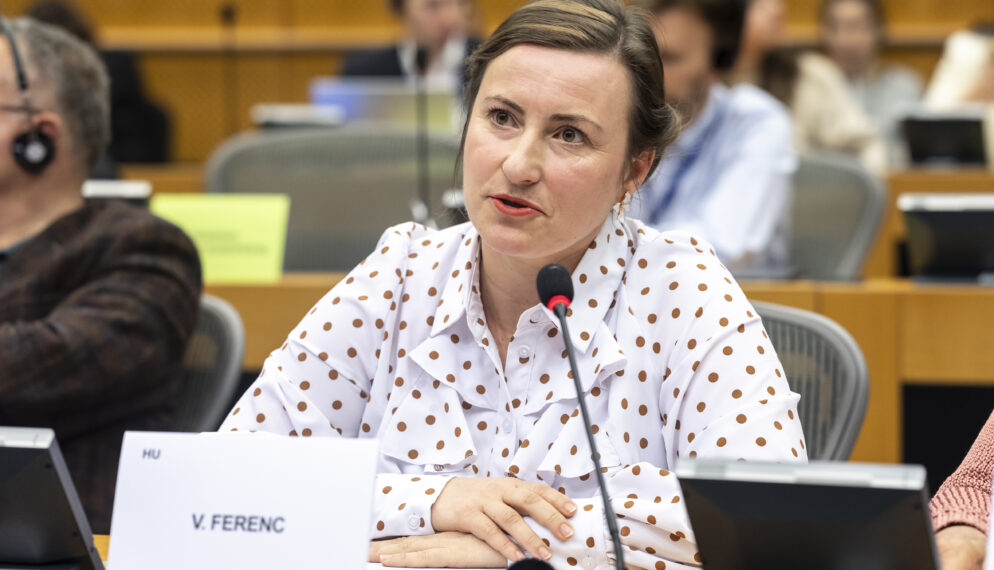
Ferenc Viktória EP-képviselő
We Expect Tangible Results in Ensuring the Rights of National Minorities Living in Ukraine
2026. 11. 05.
The EU–Ukraine Parliamentary Association Committee (PAC) held its 19th meeting in Brussels on 4–5 November, during which representatives of the European Parliament and the Verkhovna Rada exchanged views on the progress of Ukraine’s accession process to the European Union and the fulfilment of its accession-related commitments. During the meeting, which was also attended remotely by Vsevolod Chentsov, Ukraine’s Deputy Prime Minister for European and Euro-Atlantic Integration, Viktória Ferenc, MEP of Fidesz–KDNP and member of the Patriots for Europe Group, emphasised: “Ukraine’s European integration must remain a merit-based process, in which the protection of national minority rights is an indispensable element. This is a fundamental European requirement enshrined in Article 2 of the Treaty on European Union and the Copenhagen criteria.”
“As a Hungarian Member of the European Parliament with Transcarpathian origin, I feel a personal responsibility to ensure that particular attention is paid to the situation of national minorities throughout the accession process. Genuine progress must be measured not only by the adoption of legislation but also by its practical implementation,” the MEP added.
Viktória Ferenc recalled that, since 2017, significant restrictions had been imposed on the educational and language rights of national minorities living in Ukraine. At the same time, she welcomed the legislative amendments adopted in 2023 and, most recently, in October 2026, which could represent important steps towards restoring previously existing rights.
In this context, she requested specific information on the financial, administrative and professional support provided to schools offering education in minority languages to help them implement the new provisions, as well as on when tangible results could be expected. “Even after the adoption of the legislative amendments, I have heard concerns that, in certain subject-specific academic competitions, test papers were still not made available in Hungarian for Hungarian-speaking students. How much longer will it take for these legislative changes to translate into tangible results on the ground?” Viktória Ferenc asked.
The MEP also raised outstanding issues that remain to be resolved, including the use of minority languages in public administration, the use of national symbols, and the political representation of national minorities. In this regard, she sought clarification on the Ukrainian side’s specific legislative plans and the timetable for fulfilling its commitments.
Ukrainian Deputy Prime Minister Vsevolod Chentsov responded directly to Viktória Ferenc’s questions. He explained that Ukraine’s Ministry of Education is currently working on implementing acts related to the amendments to the education law. These are lower-level legal acts that will be adopted by the government. Once the drafts have been finalised, public consultations will be launched, with Hungarian and other national minority organisations in Ukraine encouraged to participate. Following the adoption of these documents, which will define the framework for national minority schools, the necessary financial resources will be allocated for their implementation.
The Deputy Prime Minister also reported that consultations with the European Commission are currently underway regarding the political representation of national minorities. The Commission has already received expert opinions from the Council of Europe and the OSCE High Commissioner on National Minorities and is expected to forward its assessment, based on these opinions, to the Ukrainian authorities in the coming weeks.
Chentsov confirmed that the deadline for implementing the remaining commitments set out in the action plan on the protection of national minorities is 2027. He added that Ukraine would continue to fulfil its commitments in consultation with the Hungarian minority, the Hungarian government, and representatives of other Member States and minority communities interested in cooperation.
Brussels, 5 November 2026